 Princeton IT Services
Resources / Blogs
Endpoint Security: How to safeguard your business?
Protect your organization's data with robust endpoint security. Safeguard your business against malware, phishing, and unauthorized access.
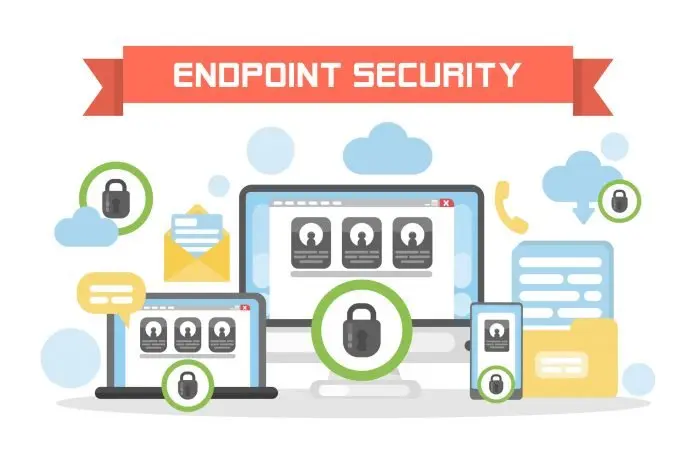
In today’s hyper-connected world, businesses of all sizes rely on a vast network of devices. From laptops and desktops to smartphones and tablets, these endpoints act as the gateways to the digital realm, connecting employees to crucial data, applications, and the internet. However, with this ever-increasing dependence on technology comes a growing vulnerability: cyberattacks. Malicious actors are constantly devising new ways to exploit weaknesses and infiltrate systems. This is where endpoint security emerges as your digital shield, a multilayered defense system that safeguards your business from a wide range of threats.
Why Endpoint Security is an Absolute Necessity
Imagine your business as a medieval castle. The strong outer walls represent your network security firewalls and access controls. While these measures are essential, they only protect the perimeter. Now, picture individual guards patrolling the castle grounds, constantly vigilant and prepared to intercept any potential threats. This is the role of endpoint security – protecting each individual device within your network and acting as the first line of defense against cyberattacks.
Here’s why endpoint security is an absolute necessity for any business:
Data Breaches: A single compromised endpoint can be a gateway for hackers to access sensitive customer information, financial records, or intellectual property. This can lead to a devastating cascade of consequences, including:
Financial Losses: Data breaches can result in hefty fines from regulatory bodies, not to mention the cost of customer notification, credit monitoring, and potential litigation.
Case in Point: In 2017, Equifax, a major credit reporting agency, suffered a data breach that exposed the sensitive information of over 147 million Americans. The company failed to patch a critical vulnerability in a web application, allowing hackers to gain access to its database. Equifax settled with the Federal Trade Commission (FTC) for a staggering $575 million, highlighting the significant financial repercussions of data breaches.
Reputational Damage due to Endpoint security
Example: Target, the retail giant, experienced a major data breach in 2013 when hackers infiltrated their point-of-sale systems and stole the credit card information of millions of customers. The breach resulted in a significant loss of customer trust, damaged Target’s reputation, and led to a decline in sales.
Operational Disruption: Recovering from a data breach can be a complex and time-consuming process, disrupting core business operations and impacting productivity.
Malware Attacks
Viruses, ransomware, and spyware can infect devices through various methods, such as phishing emails, malicious downloads, or even infected USB drives. These malicious programs can:
Malware can render devices unusable, cripple essential applications, and cause significant downtime, hindering your ability to serve customers.
Malware can steal, corrupt, or even encrypt your data, leading to irreplaceable information loss and hindering your business continuity. Ransomware, a particularly insidious form of malware, encrypts your data, essentially holding it hostage until a ransom is paid. This can be a major financial burden and a severe disruption to your operations.
Real-World Example: In 2017, the NotPetya ransomware attack wreaked havoc on businesses around the world, including Maersk, a major shipping company. The attack encrypted critical systems, disrupting operations and causing an estimated $300 million in damages to Maersk alone.
Phishing Attacks on Endpoint security
Deceptive emails or messages designed to trick employees can be used to gain access to sensitive information or lure them into clicking malicious links that infect devices with malware. Even the most well-intentioned employees can fall victim to a cleverly crafted phishing attempt.
Real-World Example: A healthcare provider with a lax approach to endpoint security fell victim to a phishing attack. An employee clicked on a malicious link in a seemingly legitimate email, unknowingly downloading ransomware onto their device. The ransomware quickly spread across the network, encrypting patient records and crippling critical systems. The healthcare provider was forced to shut down operations for days and faced significant regulatory fines for failing to adequately protect patient information.
This example highlights the critical importance of endpoint security. A single compromised device can have a ripple effect, impacting not just your finances but also your reputation and ability to operate effectively.
Conclusion
Endpoint security is not merely an option but a necessity for businesses operating in today’s digital landscape. By implementing robust endpoint security measures, businesses can protect their sensitive data, mitigate cyber risks, and safeguard their operations and reputation. As cyber threats continue to evolve, partnering with experienced consultants, such as Tech365, can provide invaluable expertise. Click on the link to schedule a free call with a Tech365 consultant and take proactive steps towards enhancing your organization’s security posture.
 Four role-based workspaces in one app