

Data Protection Classification in Ataccama ONE | Guide
Data Protection Classification in Ataccama ONE
Regulatory frameworks have fundamentally changed how organizations approach data protection classification and data handling. GDPR, HIPAA, and CCPA are not just regulatory terms — they define how businesses must manage sensitive data classification, enforce data privacy compliance, and maintain accountability.
Meeting these requirements calls for a structured data governance framework where data is clearly identified, classified, and protected.
Ataccama ONE addresses this by embedding data classification tools directly into its data catalog and quality engine. Instead of treating governance as a separate process, it ensures that data security classification and protection policies follow the data across the entire ecosystem.
What is Data Protection Classification?
Data protection classification is the process of categorizing data based on its sensitivity and regulatory requirements. It plays a critical role in data governance tools and helps organizations classify sensitive data effectively.
For example, a customer name and a social security number may exist in the same dataset, but they require different levels of data privacy classification and access control.
Ataccama ONE enables organizations to implement enterprise data classification at scale. It ensures that protection policies extend across catalog search, analytics, and exports — strengthening data catalog data protection while maintaining usability.
This approach goes beyond basic tagging. It supports metadata-driven data governance, where classifications actively control access, visibility, and governance policies across the platform.
How Data Classification Works in Ataccama ONE
Ataccama ONE follows a structured approach to data classification in data governance, ensuring consistent protection across datasets.
The framework is built on a simple chain:
Classification Tag → Business Term → Data Attribute
This model ensures that data classification best practices are applied consistently, allowing protection policies to scale across systems without manual intervention.
Step-by-Step Data Classification Strategy
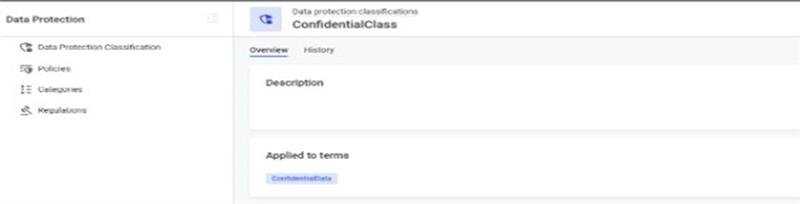
- Create Data Protection Classification Tags
Start by defining classification levels such as confidential or restricted. These tags form the base of your data classification strategy and align with regulatory needs like GDPR data classification.
- Apply Tags to Business Terms
Link classification tags to business terms to create context. This step strengthens metadata-driven data governance and ensures policies are meaningful and enforceable.
- Configure Access Control
Define which users can access classified data. This is essential for data classification and access control strategy, ensuring only authorized users can view sensitive information.
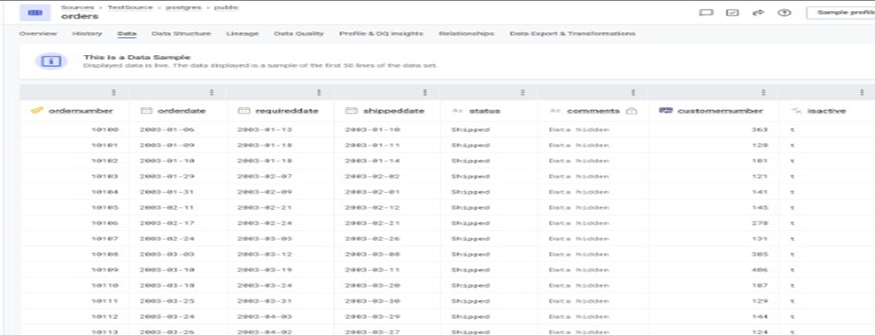
- Apply Terms to Data Attributes
Assign business terms to specific data fields. This enables enterprise data classification at the attribute level, ensuring precise control.
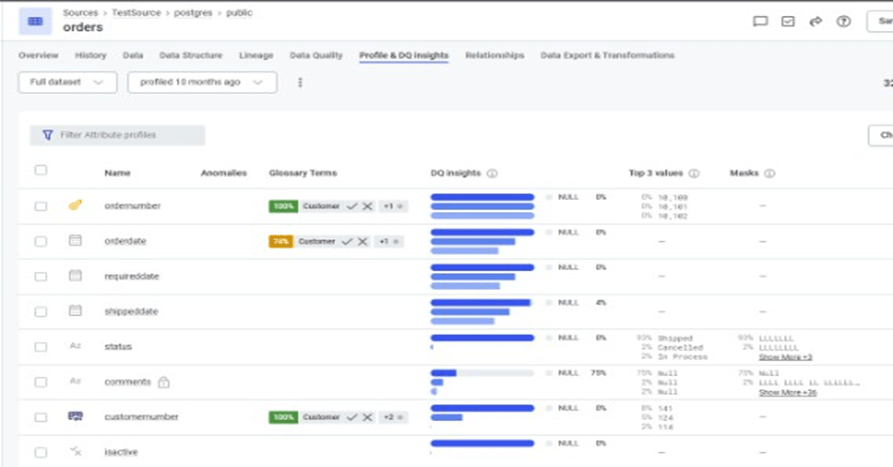
- Configure Profiling Data Protection
Even aggregated insights can expose risk. Configuring profiling controls helps protect sensitive data in data catalog environments by limiting indirect exposure.
Why Statistical Suppression Matters
A strong data protection classification strategy must consider indirect data exposure. Metadata insights can reveal patterns that compromise security.
For example, pattern analysis or frequency distribution can expose trends within sensitive datasets — making sensitive data classification incomplete without controls.
Ataccama ONE addresses this by suppressing:
- Frequency distributions to prevent pattern leakage
- Null rate charts to avoid completeness insights
- Pattern analysis to block format inference
- Data quality insights to protect exposure of metrics
This ensures your data privacy compliance tools strategy covers both direct and indirect risks.
Conclusion
A modern data governance framework requires more than visibility — it requires control. With Ataccama ONE, organizations can implement a scalable data classification strategy that aligns with compliance requirements and business needs.
By combining data classification tools, business terms, and access control, it ensures that sensitive data is only accessible through proper authorization.
For organizations dealing with complex regulations, adopting data classification best practices is not optional — it is essential.
Data protection classification in Ataccama ONE is not just a feature. It is the foundation of secure, compliant data governance.
Categories
- Accessibility solutions (3)
- AI / LLMOps (AI Observability & Monitoring) (3)
- AI & Automation (17)
- AI Governance & Responsible AI (4)
- AI Security (4)
- Android (17)
- Angular JS (1)
- API & Integration / Developer Tools (1)
- Apple (3)
- Artificial Intelligence (1)
- Artificial Intelligence (AI) (16)
- AV & Collaboration Technology (2)
- AWS Cloud Computing (2)
- AWS DMS (6)
- AWS RDS (12)
- Azure (3)
- BI & ANALYTICS (16)
- Cloud Computing & AI (5)
- Cloud Identity & Directory Services (1)
- Cloud Migration (12)
- Cloud Security & Identity Management (3)
- Company News (5)
- Continuous integration and continuous deployment (2)
- Cybersecurity (7)
- Data Analytics (12)
- Data Engineering (8)
- Data Governance & Compliance (6)
- Data Management (5)
- Data Migration (9)
- Data Quality (1)
- Data Quality & Data Governance (1)
- DBA (10)
- DevOps (1)
- Email Security (1)
- Endpoint Management / Device Management (1)
- Enterprise AI / AI Governance (1)
- Enterprise AI / AI Implementation Best Practices (1)
- Enterprise AI & Intelligent Automation (2)
- Enterprise Mobility & Security (1)
- Enterprise Software Integration / Backend Development (1)
- Enterprise Technology (1)
- Enterprise UX/UI Design (1)
- Goldengate (19)
- Google (2)
- Hadoop (3)
- HPNA (1)
- Ios (10)
- ios 10 (2)
- iPad (3)
- iPhone (3)
- Licensing (7)
- Linux (13)
- Machine Learning Solutions (1)
- Marketing Technology (1)
- Microsoft 365 (1)
- Microsoft 365 Development / APIs (1)
- Microsoft 365 Security & Compliance (4)
- Microsoft Configuration Manager (SCCM / MECM) (1)
- Microsoft Dynamics 365 (4)
- Microsoft Marketplace (1)
- Microsoft Office (5)
- Microsoft Purview (3)
- Microsoft SharePoint & Security (1)
- Microsoft Teams / Collaboration Tools (1)
- Microsoft Teams Security & Compliance (2)
- Mobile (2)
- Network Automation (5)
- Network Security Services (1)
- News (21)
- Operating System (1)
- Oracle (37)
- oracle consulting (3)
- PostgreSQL (1)
- Quantum Computing (1)
- Quickbooks (1)
- SEO (1)
- Software Development (33)
- Systems Automation (2)
- Tech (3)
- Technology (51)
- UI (13)
- Uncategorized (8)
- UX (9)
- VSTO (1)
- Web Development (1)
- Windows (9)
- wordpress (1)